Mobile gaming has transformed the way people interact with entertainment. One key innovation is the ability of games to cater to both short bursts and extended play sessions. Whether you’re waiting for a bus or diving into a weekend gaming marathon, mobile games are carefully designed to fit seamlessly into different schedules and lifestyles.
This optimization ensures maximum engagement, player retention, and satisfaction across all types of users.
Designing for Short Play Sessions
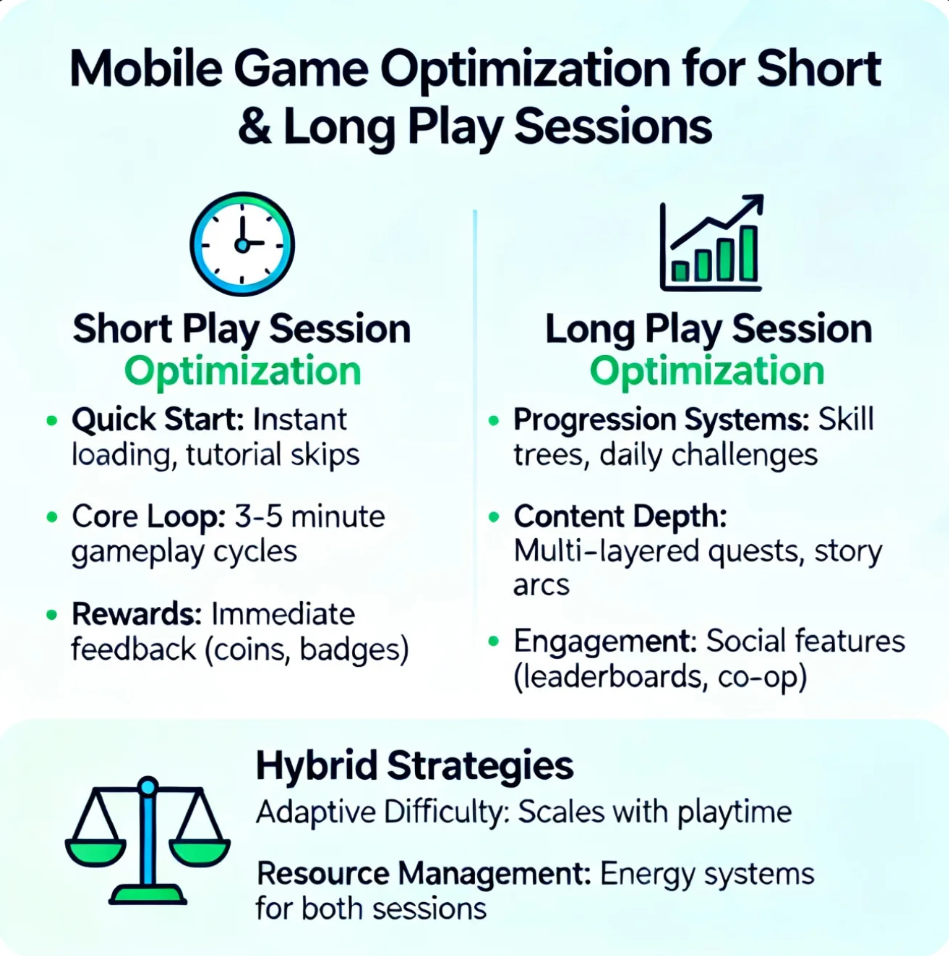
Short play sessions target players who want quick, satisfying gameplay in limited timeframes. Developers focus on:
- Instant accessibility: Games load quickly and are easy to pick up
- Quick rewards: Achievements, coins, or points earned in minutes
- Minimal setup: No long tutorials or complex mechanics required
- Level-based or modular design: Clear mini-goals for each session
These features make mobile games ideal for commuters, short breaks, or casual players who want entertainment without commitment.
Designing for Long Play Sessions
Long play sessions cater to more invested players who enjoy immersive experiences:
- Story-driven campaigns: Complex narratives keep players engaged for hours
- Progression systems: Character upgrades, skill trees, or unlockable content
- Social or competitive elements: Multiplayer modes, guilds, or leaderboards
- Deep strategy or skill development: Games challenge players to plan, adapt, and master mechanics
This design approach encourages player loyalty and enhances the sense of achievement over extended periods.
Balancing Both Play Styles
Successful mobile games often blend both short and long play designs:
- Quick, satisfying tasks provide dopamine rewards for casual sessions
- Longer, optional challenges keep dedicated players invested
- Flexible session pacing allows users to switch between casual and extended play seamlessly
This hybrid model maximizes engagement, appealing to a broader audience without alienating either group.
Monetization and Retention Considerations
Optimizing for different session lengths also impacts revenue strategies:
- Short sessions: Microtransactions for quick boosts or cosmetics
- Long sessions: Season passes, in-game events, and subscription models
Retention is strengthened by offering rewards and milestones for all players, regardless of how long they play.
Examples of Effective Design
- Casual puzzle games (e.g., Candy Crush) excel at short bursts
- Mobile RPGs and strategy games (e.g., Genshin Impact, Clash of Clans) reward extended play
- Many modern games integrate both, letting players progress even with a few minutes a day
This flexibility keeps mobile gaming accessible and engaging across demographics.
Conclusion
Mobile games are carefully crafted to accommodate short and long play sessions, balancing accessibility, engagement, and depth. By offering flexible gameplay, rewarding experiences, and scalable challenges, mobile games meet the needs of casual users and dedicated players alike—ensuring that everyone can enjoy their favorite titles on their own terms.
About the Author