Once considered a tool for calls, texts, and social media, smartphones have transformed into the world’s most popular gaming platform. From casual puzzle games to competitive multiplayer titles, mobile devices now host billions of players worldwide.
But how did handheld devices evolve from simple gadgets to global gaming hubs? This article explores the rise of smartphones as the ultimate gaming platform and the factors driving their unprecedented popularity.
The Early Mobile Gaming Era
From Snake to Social Gaming
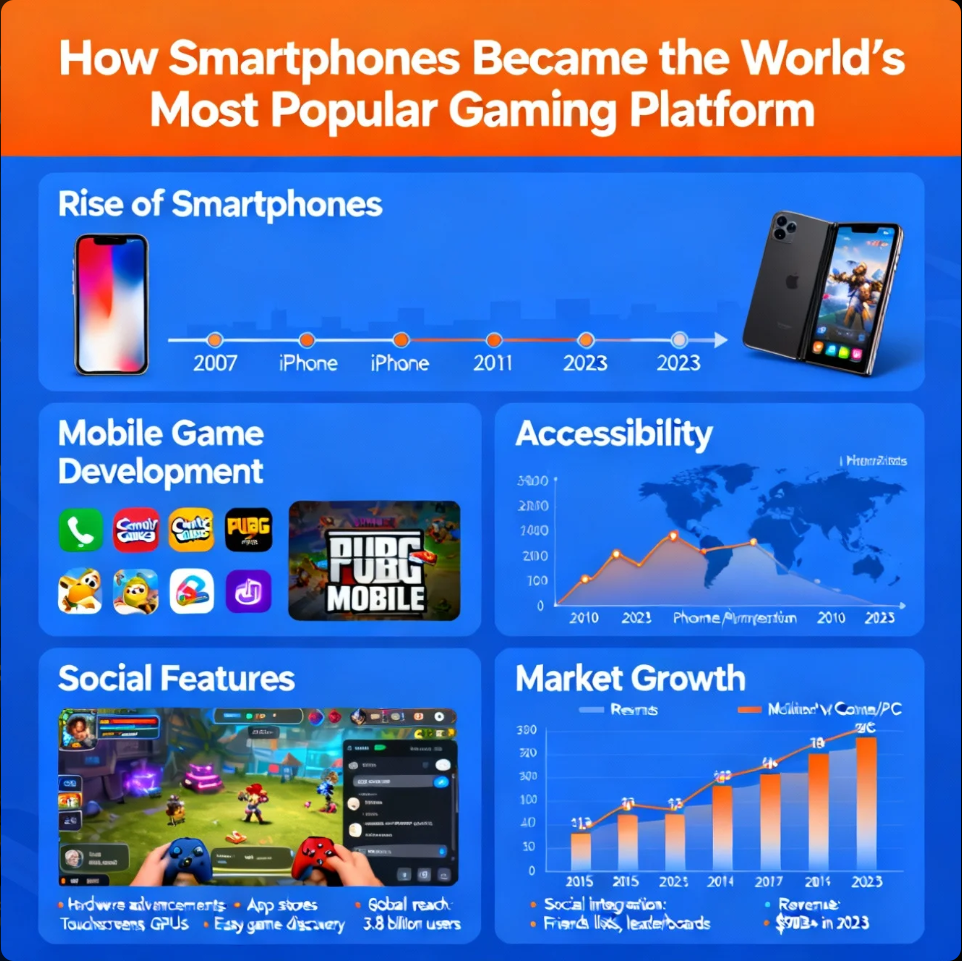
Mobile gaming began with simple pre-installed games like Snake on early Nokia phones. As devices became smarter, games evolved:
- Java and Flash-based games allowed more complexity
- Touchscreens enabled intuitive controls
- Social integration brought friends into gameplay
These early experiences laid the foundation for mobile gaming’s global expansion.
🔗 Outbound link: History of Mobile Gaming – IGN
https://www.ign.com/articles/history-of-mobile-gaming
Smartphone Technology Enables Innovation
Hardware and Software Advancements
Smartphones became viable gaming devices thanks to:
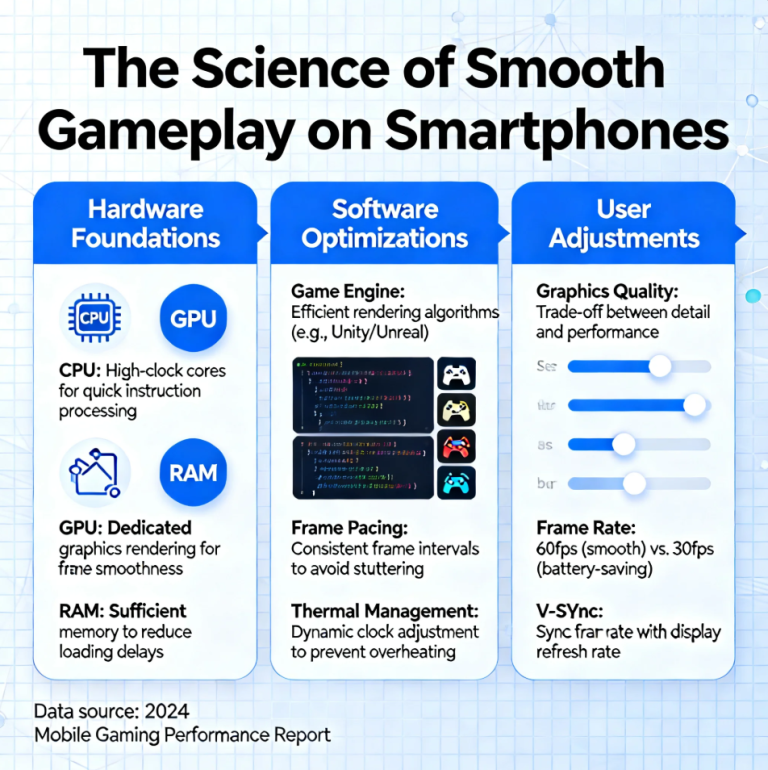
- Powerful processors and GPUs for complex graphics
- High-resolution displays for immersive visuals
- App stores providing easy access and distribution
- Touch, gyro, and haptic feedback for interactive controls
The combination of hardware and software innovation turned pocket-sized devices into portable gaming consoles.
Casual Gaming and Accessibility
Gaming for Everyone
Unlike consoles or PCs, smartphones are nearly universal. This accessibility fueled massive growth:
- Free-to-play games attract millions of casual players
- Microtransactions support diverse monetization models
- Short sessions make gaming easy to fit into daily routines
This democratization made mobile gaming appealing to a broader audience beyond traditional gamers.
🔗 Outbound link: Newzoo – Mobile Gaming Market Insights
https://newzoo.com
Social Integration and Multiplayer Experiences
Gaming as a Shared Experience
Smartphones turned gaming into a social activity:
- Multiplayer online games allow global competition
- Social media integration encourages sharing and challenges
- Communities form around mobile eSports and cooperative play
The social layer keeps players engaged, creating connected gaming ecosystems.
Cloud Gaming and Cross-Platform Play
Bridging Mobile with Other Platforms
Cloud technology allows high-end games to stream to smartphones without heavy hardware. Cross-platform play ensures:
- Players can compete across devices
- Mobile users stay connected to console and PC ecosystems
- High-quality, console-level experiences become portable
These advancements reinforce smartphones as central hubs for modern gaming.
Economic Impact of Mobile Gaming
Billions in Revenue Worldwide
Mobile gaming dominates global revenue, surpassing consoles and PC in earnings. Key drivers include:
- Free-to-play models with in-game purchases
- Subscription services and premium games
- Advertising in games
The financial scale confirms smartphones are no longer secondary—they are the core of the gaming industry.
🔗 Outbound link: Statista – Mobile Gaming Revenue
https://www.statista.com/topics/1002/mobile-gaming
Why Smartphones Continue to Dominate
- Convenience and portability
- Constant innovation in hardware and software
- Social integration and multiplayer appeal
- Access to billions of global users
Smartphones have evolved into platforms where gaming, social interaction, and entertainment converge—a trend likely to continue as technology advances.
Conclusion
The story of how smartphones became the world’s most popular gaming platform is one of accessibility, innovation, and cultural integration. From simple pre-installed games to cloud-streamed multiplayer experiences, mobile devices have reshaped the gaming landscape, proving that the best games are often in the palm of your hand.
About the Author